
Three names for different bands
Ultraviolet is electromagnetic radiation with wavelengths shorter than visible violet light. Our eyes cannot see it. From longer to shorter wavelengths, it is divided into UVA, UVB, and UVC. All are UV, but they pass through the atmosphere differently.
Not everything emitted by the sun reaches the ground
WHO's UV FAQ explains that as sunlight passes through the atmosphere, all solar UVC and most UVB are absorbed, while UVA is filtered less.
- UVA: passes through the atmosphere more readily and is an important part of ground-level UV conditions.
- UVB: is largely absorbed by the atmosphere, but some reaches the ground.
- UVC: from the sun is blocked by the atmosphere in ordinary ground-level sunlight conditions. UVC from artificial sources is a different exposure situation.
Distinguish what the sun emits from what we receive at ground level.

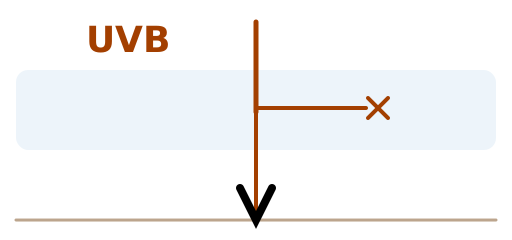

Conceptual illustration; not to scale.
Check UV information even when it feels cool
Skin temperature sensations cannot directly establish UV levels. ARPANSA notes that strong UV can occur in cool weather. Time, clouds, altitude, and surrounding reflections all affect actual conditions.
The UV Index (UVI) expresses UV levels weighted for skin erythema in a number accessible to the public. It is not a live table of separate UVA and UVB amounts, or a countdown of safe personal exposure time.
Use these concepts in daily life
After exploring the bands, read The UV Index and protection and use local information to understand shade, clothing, hats, and other protection.
For UVB and vitamin D synthesis in skin, read the explanation of the mechanism. Wavelength bands help explain mechanisms; they cannot by themselves assess individual nutrition.
Apply UVA and UVB knowledge
UVA and UVB distinguish bands; weather UVI helps explain protection needs. For an outing, use local hourly information and combine clothing, shade, sunglasses and suitable sunscreen. You do not need to calculate every band’s energy before acting.
For daytime light, choose an outing with protection and rest. For vitamin D, learn about UVB and actual exposure and connect food sources. Clothing, windows, pigmentation and season change conditions; one UVI value cannot calculate personal production.
Glass transmits bands differently, and artificial germicidal UVC is another setting. Check the band and purpose of claims about materials or devices rather than turn them into outdoor-duration advice.