
Consider your surroundings first
Glass, tree shade, and clouds all affect UV reaching the skin, but the extent varies with materials, position, and weather. Being indoors, in tree shade, or under an overcast sky does not by itself establish zero UV.
Through glass
Ordinary window glass usually blocks most UVB, which is involved in vitamin D synthesis in skin. Sunlight through a window should not be treated as a vitamin D source. Transmission varies with the glass and film. Glass still allows some visible daylight through, so saying that light through windows has no effects at all is also inaccurate.
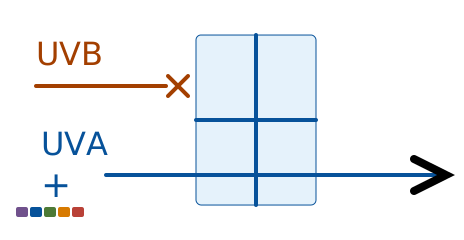
Conceptual illustration; not to scale.
Tree shade and building shadows
Shade can reduce direct sunlight, but scattering and reflection from the ground, walls, and sky also affect UV exposure. Tree shade varies with canopy density, the sun's position, and surroundings. A fixed percentage should not be applied everywhere.
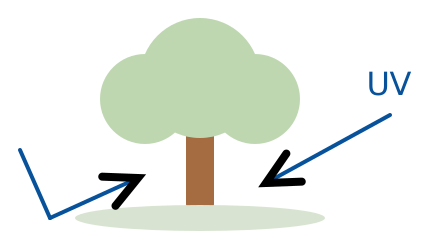
Conceptual illustration; not to scale.
Overcast and cloudy conditions
Cloud cover and cloud conditions change UV levels. Overcast weather does not mean no UV. Check local UVI before outdoor activities and consider duration, shade, and reflective surroundings when choosing protection.
Remember: barriers change exposure conditions, but glass, shade, or cloud cover alone cannot establish zero UV.
Further reading: The UV Index and outdoor protection.
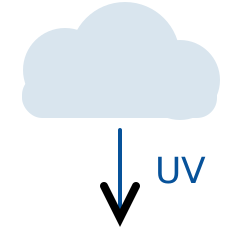
Conceptual illustration; not to scale.
Choosing between a window, shade and outdoors
For daytime reading or light environments, use a suitable window position. For skin UVB conditions, do not treat glass as equivalent sun exposure. For a walk, use shade and protection; comfortable activity and personal synthesis are different questions.
Before staying under a tree, check canopy density and shade area and find another rest option. Shade moves and surrounding reflection matters; changing position is more actionable than memorising one protection percentage.
On cloudy days, check local hourly UVI, prepare clothing and exposed-skin protection as needed, and check heat or storm warnings separately. Without valid information, choose a route with rest and a return option and check again later.