
What a shadow can tell you
On relatively level ground, when a vertical object's shadow is about as long as the object is tall, solar elevation is about 45°. A shorter shadow means the sun is higher; a longer one means it is lower. Whether the object is vertical and the ground is level affects the observation.
The 45° comes from right-triangle geometry: the tangent of solar elevation equals object height divided by horizontal shadow length. When these are equal, the tangent is 1. This is not an individual protection threshold derived from health research.
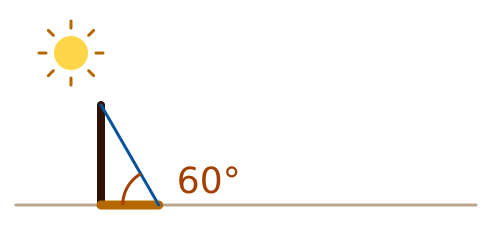
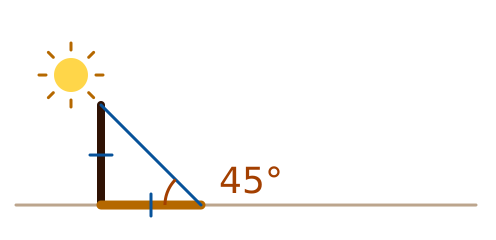
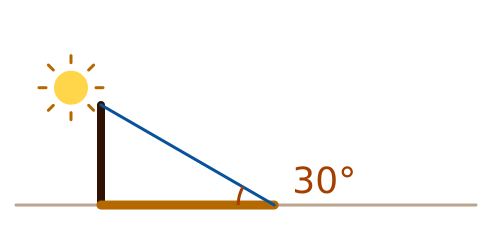
Conceptual illustration; not to scale.
What a shadow cannot tell you
A shadow is a simple clue to the sun's geometric position, not a UV-measuring instrument. Clouds, ozone, altitude, ground reflection, and surrounding obstructions affect actual UV conditions. Equal shadow lengths do not necessarily mean equal UV exposure.
Shadows cannot establish personal vitamin D production, skin risk, or a need for supplementation. For outdoor protection, check local UV information and relevant public guidance.
The Silva (2020) reference at the end links to a PubMed abstract discussing limitations of the shadow rule in tropical regions. The full paper was not obtained; it is not used to prescribe personal sun-exposure duration.
How to use this in daily life
Use shadows to observe changes in the sun's position through the day. Outdoors, still follow local UV information, weather, and surrounding conditions when protecting yourself. A short shadow does not mean protection is unnecessary or direct sun exposure is advisable.
Remember: a shadow tells you roughly where the sun is, not what your body has gained.
Use shadows to plan where to stay
Observe a fixed vertical object’s shadow on safe level ground, noting local time, height and shadow length. Compare the same object at different times. Slopes, leaning objects and perspective affect results; observe the ground, not the sun.
A practical use is noticing whether a seat’s shade will move. For a longer stay, identify alternative shade, rest and a return route. Move if direct sun reaches the seat rather than assume morning shade lasts all day.
Shadows explain position, UVI informs protection, and weather and warnings describe other conditions. Together they connect geometry with outing preparation, without converting shadow length into personal vitamin D production.